What we do, and where to start.

We build HubSpot, websites, and integrations. Some clients need one. Some need all three. Either way, we start by understanding how your systems fit together.

Our Services

  1. Revenue System

    HubSpot and Revenue Operations
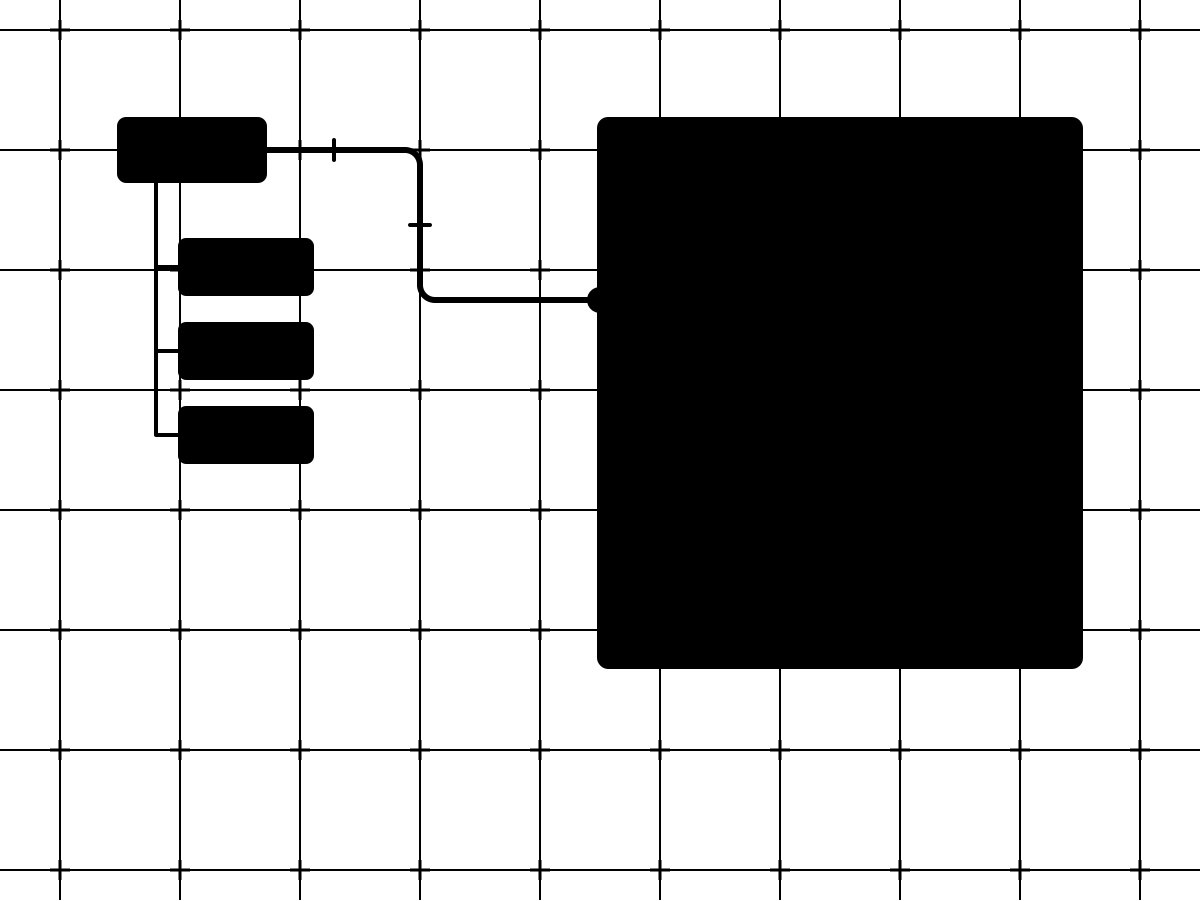
    Plan-view diagram: a shared customer record connected to marketing, sales, and service teams. The record fields are schematic.

    We architect, implement, and support HubSpot as the system your marketing, sales, and service teams share, built around how your business runs rather than how the portal ships.

    The work starts before configuration, with the people who own your other systems. Which one is the source of truth for a customer, an account, or an order. What HubSpot needs to read from them and what it needs to write back. Those answers shape the data model, the pipelines, and the reporting, and they are different for every business we work with.

    Then we build in phases your team can use on day one, train each role on the part they touch, and keep the documentation inside the portal.

    If you already have HubSpot and it never took hold, we start from what is in the portal today rather than from an assumed rebuild.

    What we offer

    • HubSpot audits, for teams already on the platform
    • Strategic roadmaps, with every engagement or on their own
    • Full HubSpot implementations
    • HubSpot portal remediation and cleanup
    • Data hygiene
    • CRM and data architecture
    • Reporting and dashboards
    • Sales enablement
    • HubSpot template and asset development, including email templates
    • HubSpot agents and AI features, configured for the work your team does
    • Training and in-portal documentation
    • Ongoing support and improvement
    Explore HubSpot and Revenue Operations
  2. Digital System

    Websites and Digital Experiences

    Plan-view diagram: a content hierarchy becomes an organized page with a dashed space for future additions. The page is schematic.

    We design and build websites on HubSpot CMS and WordPress that your team can publish to, extend, and grow after launch, structured so search engines and answer engines can find and cite them.

    Every build starts with information architecture: who the site is for, what each of them came to do, and who on your team gets to publish. If the site has to hand data to a CRM, take an order, or live inside an institution's design system, that is settled in the architecture, not discovered in development. If the site stands on its own, the architecture is still where we start, because it is what lets your team add a section in year two without calling us.

    We also build custom features and functionality on websites we did not build. If your WordPress or HubSpot CMS site needs a tool it does not have, a counselor finder, a serviceability lookup, an application path, we can add it without starting over.

    What we offer

    • Website audits
    • Website roadmaps
    • Information architecture and content strategy
    • Website design and development
    • Custom theme and module development
    • Custom features and functionality for existing WordPress and HubSpot CMS sites
    • Landing page design and development
    • Migration and redirect strategy
    • AEO-ready structure: clear headings, answer-first content, and schema markup
    • Accessibility testing with a WCAG compliance report
    • Analytics configuration and website analytics
    • Paid digital advertising
    • Training and documentation
    • Managed hosting on WP Engine
    Explore Websites and Digital Experiences
  3. Connected System

    Integrations and Automations

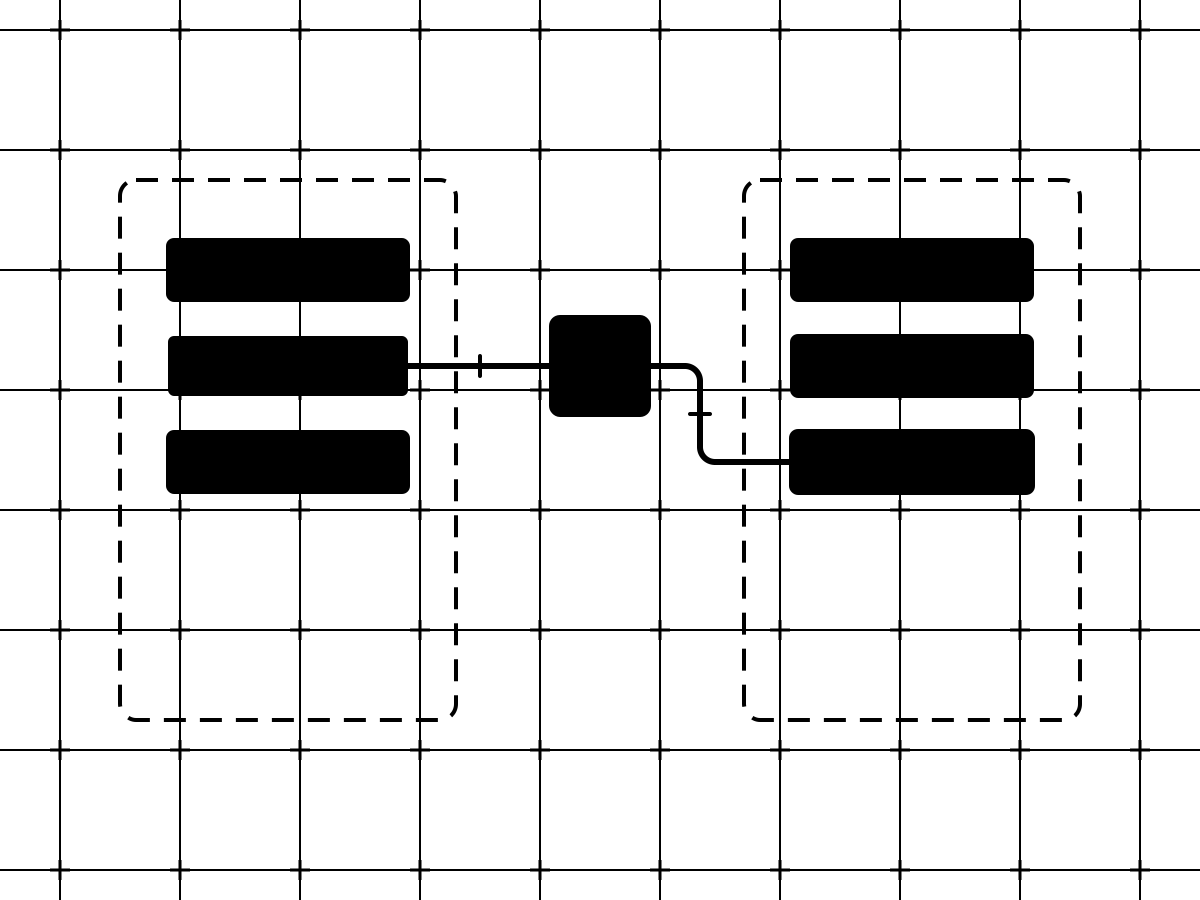
    Plan-view diagram: a record passes from one system through a mapping step into another system. This illustrates one generic handoff.

    We connect the systems that hold your data to the ones that act on it, so your CRM, your operational platforms, and your website stop disagreeing about the same customer.

    Integration work starts with a map: which system owns each record, which direction the data moves, and what happens when two systems disagree. That map becomes the build. We have connected HubSpot to billing and operations platforms, PSA and ERP systems, enrollment systems, and reporting layers, and the list grows with every engagement.

    Where an automation or an applied AI step takes real work off a person's plate, we build it, test it, and document it so your team can see what it does and change it later.

    Where a platform is not viable to connect, we say so during the roadmap, not after the contract.

    What we offer

    • Tech stack and integration audits
    • Requirements and data mapping with stakeholder sign-off
    • API and middleware development
    • Data migration and cleanup
    • Workflow automation inside HubSpot and between systems
    • Applied AI systems, scoped to a specific task and documented
    • Testing, deployment, and handover documentation
    • Maintenance and support for custom integrations
    Explore Integrations and Automations

We look at the whole system.

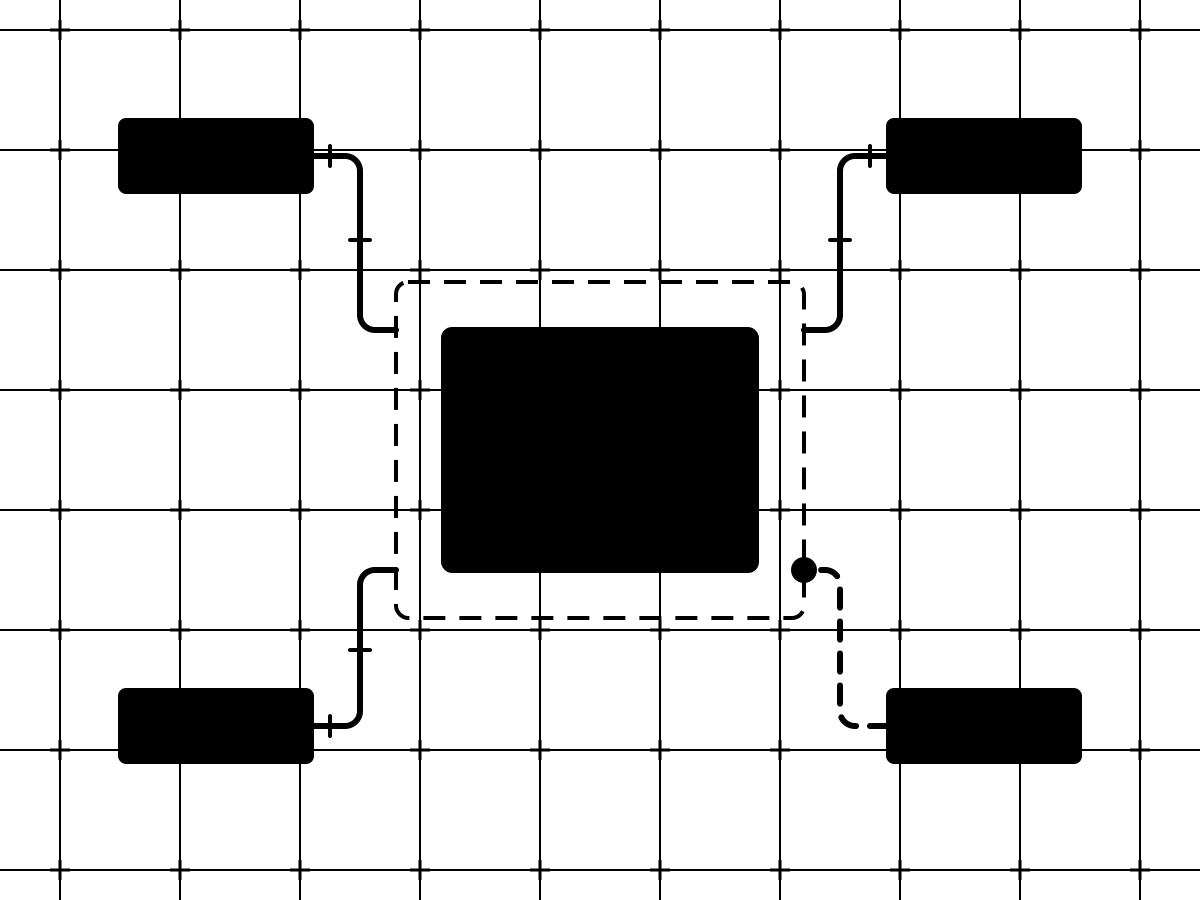
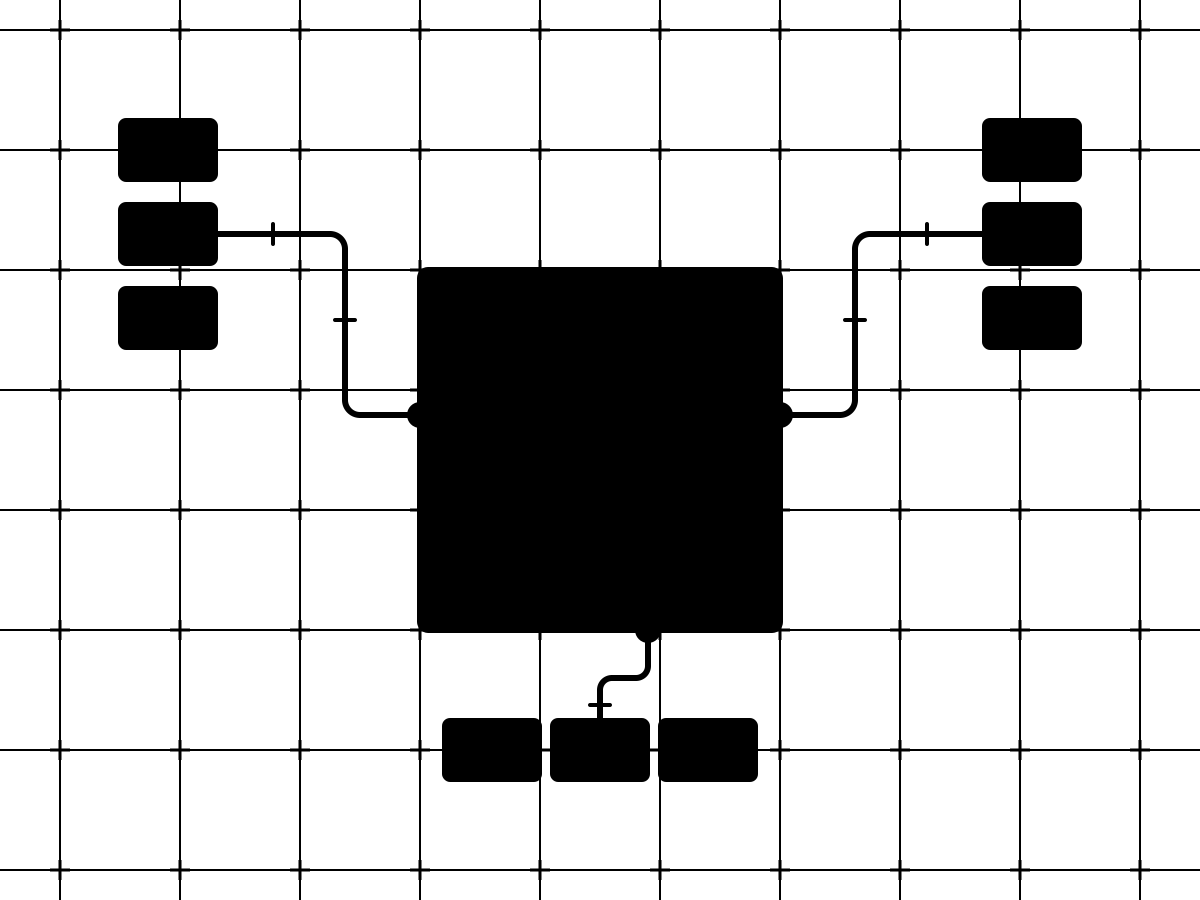
One system, marked as the scope, connected to four others; one connection is drawn dashed and marked where a dependency was found early.

Most clients hire us for one thing: a portal that needs rebuilding, a site that needs replacing, two systems that need to agree. Before we build it, we map how it connects to everything else you run, because a website decision is usually a data decision, and a CRM decision usually depends on what billing or the PSA can provide.

The map is not a proposal to rebuild everything. It is how we make sure the one thing you hired us for fits what you already have, and how we tell you early if something it depends on will get in the way.

The scope stays where you put it. When clients do expand the work later, it is because the map showed them something worth doing next.

See how we work

How the work runs

The same three steps, whether you hire us for one system or several.

  1. Map

    Time with the people who own the systems before anything is built. What each system owns, what the one you are changing depends on, and who runs it afterward. This is where scope gets settled, and where we tell you if the problem you brought us is smaller or larger than it looked.

  2. Build

    A first phase your team can use on day one, rather than everything at once. Later phases are your call, made with better evidence.

  3. Adopt

    Training for each role on the part they use, documentation inside the platform, and improvement that continues past launch if you want it.

Common questions

Do we have to work with Second Mile on all three services?

No. Many engagements are one service: a HubSpot implementation, a website, or an integration. We map how that one connects to your other systems before we build, so it fits what you already run, and the scope stays where you set it.

Do we need a HubSpot audit before an implementation?

It depends on where you are. If you are new to HubSpot, no, because there is nothing to audit yet; the strategic roadmap is built as the first part of the implementation. If you already have HubSpot, yes. We audit what is in the portal before we make any strategic recommendations, so the plan is based on what is there rather than on assumptions.

Do we need a website audit before a redesign?

Not as a separate step. Every website engagement begins with a roadmap, which covers what an audit would. A standalone website audit or roadmap is the right first step when the site is large, the ownership is unclear, or you want the plan before committing to the build.

Will our team be able to run the website or HubSpot without an agency?

Yes. That is the goal of every engagement. Each build ships with role-based training and documentation that lives inside the platform, and ongoing support exists for the work your team chooses not to do itself, not for the work it cannot do. The one exception is a complex custom integration. Code changes, data mappings evolve, and connected platforms update on their own schedules, so if you do not have an in-house technical team we strongly recommend a small maintenance and support retainer to troubleshoot and keep the integration healthy.

What does Second Mile not do?

Standalone IT support, quick fixes, social media management, and content-only retainers. We build and connect systems: HubSpot, websites, and the integrations between them and the platforms your business runs on. If the work does not touch one of those, we are not the right partner, and we will say so on the first call.

Is Second Mile a fit for a small, one-off fix?

Usually not. A single workflow repair or a landing page tweak is better handled by your team or a freelancer, and we will point you that way. Where we are the right call is when the fix keeps recurring, because that usually means the system underneath needs mapping rather than patching.

Do you offer social media or content retainers?

No. We do not run social channels or write content on a monthly basis. Our ongoing engagements are for keeping HubSpot, a website, or an integration working and improving: new features, new automations, reporting, paid digital advertising, and the next phase of the build.

Choose the next useful step

Find your next move.

We will help identify the right starting point, the systems and people involved, and the smallest useful phase that can create momentum.

Talk through the problem

Connect with our team

Talk through your challenges and see if Second Mile is the right partner to help.

Talk through the problem

Find the right service

Explore our services

See the evidence

Explore our work